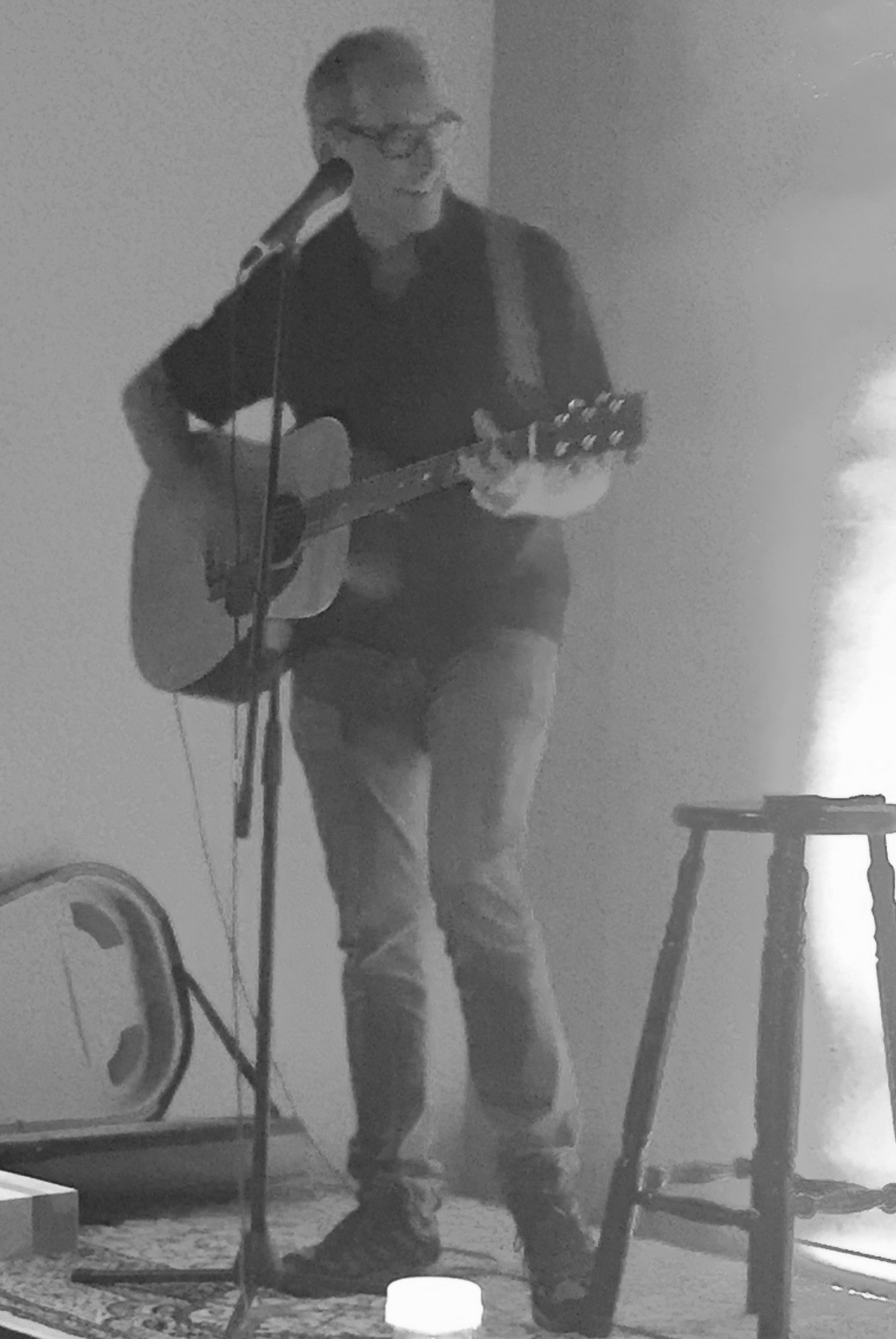
Jack Langer
Pediatric General Surgeon, ~35 years in practice
“I still loved academic surgery, but I didn't want to go back full-time — I wanted to diversify myself and pursue other things in my life beyond surgery.”
Anonymous by default, named if the contributor chooses. Submitted by retired surgeons and surgeons in transition. These are the stories of challenge and struggle in surgeon transition as well as stories of success — because both happen, and both have value.
An editorial note: Stories of challenge and failure are as valuable — perhaps more so — than success stories. If your retirement has been harder than you expected, we want to hear about it. Anonymity is the default. Your story may be the one that helps a colleague who is not yet ready to tell theirs.
The stories which follow are both real or fictional placeholders illustrating the kinds of experiences this community will share. We are gathering additional real stories from surgeons who have navigated this transition.
Pediatric General Surgeon, ~35 years in practice
“I still loved academic surgery, but I didn't want to go back full-time — I wanted to diversify myself and pursue other things in my life beyond surgery.”
Neurosurgeon, ~40 years in practice
“I wasn't ready to 'hang it up' completely — I still craved the patient contact, and the contact with my peers in the medical community.”
Jack Langer
I'm an academic pediatric surgeon who has had a wonderful career. I did basic laboratory and translational research for about 6 years and then focused on developing new minimal access approaches to pediatric surgical conditions when laparoscopic surgery entered the scene in the early 1990s. In 1999, I was recruited back to Toronto (my hometown and the place I did most of my training) to take on a leadership role as Division Head and over 13 years I did my best to build a strong clinical and academic Division at the Hospital for Sick Children.
At around age 58 I realized that I was experiencing significant burnout, so I stepped down from my leadership position and took a six-month sabbatical in San Francisco, the city in which I had done my research training in the late 1980s, and which my wife and I both loved. I got back into physical shape, and I started to play and write music again, a passion that I had left behind when I entered surgical residency so many years before. During that sabbatical I also realized that I still loved academic surgery, but I didn't want to go back full-time because I wanted to diversify myself and pursue other things in my life beyond surgery. When I got back, I was fortunate to be able to negotiate a half-time position which was structured three months off and three months on, and we began spending our summers in Collingwood and our winters back in San Francisco, in "retirement mode". I recorded and produced an album of original songs, I took up golf, and I spent way more time with my children and grandchildren. During the six months per year I was working, I continued to run a busy practice of complex cases, I taught and I continued to engage in meaningful clinical research projects. I felt like my life was finally balanced.
Three years ago, at age 67, I decided to retire from my practice. This decision was influenced by several factors. One, I had developed arthritis in my thumbs, and I was concerned that the pain associated with long and complex cases might impair my ability to do those cases as well as I wanted to. Two, I found the high risk and complex cases increasingly stressful, which seemed counterintuitive since my experience and expertise was as good as it had ever been. Three, the physical toll of early mornings, night and weekend call, and long operations was harder and harder to recover from. And four, I had a growing family, none of whom lived in Toronto, and I wanted to spend more time with them.
It has been my experience, as well as the experience of others, that once I retired from practice, people found out and other opportunities began to appear. I continue to hold an appointment in my Division, and I have ongoing teaching and mentoring responsibilities which keeps me engaged and makes me feel like I'm contributing my expertise to the next generation of pediatric surgeons. I have a number of jobs with the University Department of Surgery, including leading the ASSET group and participating in a number of departmental and faculty committees. And I have plenty of time to write and play music (now two albums and three new singles; details at www.jacoblangermusic.com), work on my golf game, stay in shape through cycling and the gym, read, and spend time with my wife, my children and my grandchildren.
Mark Bernstein
Like the website says, retirement planning starts at the beginning. I feel I was ready for "the transition" due to some good (lucky?) decisions I made throughout my career relating to self-reinvention. Like all of us early on I was heavily into clinical care, education, and research. At age 42 I became the Head of the Division of Neurosurgery at UHN and at 50 went back to school to get a MHSc in Bioethics while I was working full-time. Then I got involved in some "different" sorts of activities for surgeons - non-medical writing, qualitative research, teaching missions in Southeast Asia and sub-Saharan Africa, and at 65 went back to school again and trained in home palliative care which I practised until 2023 while still an active neurosurgeon.
At age 71.5 I decided to stop operating. But I wasn't ready to "hang it up" completely so kept doing clinics (twice a week at TWH and a few a month at PMH) because I still craved the patient contact, and the contact with my peers in the medical community. I'm 76 (in 2026) and still enjoying the clinical work and still researching and publishing. I also cherish the extra time for my family, my cottage, and other interests. I'm not sure when I'll "hang it up" completely but having options is great.
General Surgeon
“I wanted colleagues to ask ‘why are you retiring?’, not ‘when are you retiring?’”
Jaime Escallon
I believe there are three distinct stages for retiring: First, thinking about retiring. Second, the actual retirement. And third what do you after.
Initially I thought that age was the determining factor to consider retiring, but I soon realised that this no longer held true, and that age only applies if there is a mandatory retirement age (which can no longer be the case in Ontario). Nevertheless, I felt that it was a clever idea to start considering retirement and preparing for it. In theory you should have started thinking about retirement at the beginning of your career, but this is difficult to do because you see retirement so far away, and you assume that there will be time to think about that in the future.
But I did start thinking about my practice, and who was going to take it over. I had discussions with the Division head about mentoring a successor and planning the transition of patient care. For academic surgeons, succession planning is one of the most valuable contributions they can make during the transition.
I had given up being on call long before I even considered retiring, which is something that my kind of practice allowed me to do and it was a significant factor in being able to continue practicing and to maintain professional engagement while improving work-life balance. I have always enjoyed my work.
The other big question was whether I could afford to retire? Discussing this issue and making plans with my wife was a particularly key component of the decision to retire. I needed to ensure that we would have enough economic support to maintain our standard of living so that I could enjoy my retirement when the time came.
I had a basic principle. I wanted to retire when my colleagues asked, “why are you retiring?” and not “when are you retiring?” This means that I made the decision to retire when I was still in a busy and successful practice and not because me or someone else was noticing a decline in my ability as a surgeon. You should not wait for someone to negatively judge your ability and ask you to retire.
I set a date to stop operating and made some changes to avoid the temptation of doing “one more case”. I gave up my OR time and changed my insurance coverage to only clinic practice and no operating. I continued to maintain a clinic focused primarily on follow-up patients. I still saw some new patients, and if they required surgery I transferred their care to one of my colleagues.
I am still involved in educational activities at the student, resident and fellow levels. My academic appointment has always been as a surgeon-educator, something I love to do and am particularly good at. I continue to be involved in international education with the Colombian Association of Surgery, where I am involved in developing innovative programs.
These activities have allowed me to continue to be involved within the Department of Surgery, and to continue to interact with others. I often say that I do not miss operating; what I miss has been in the Operating Room, with all the interactions with other disciplines that have been like family for many years.
In preparation for retiring, my wife and my family played a very important role. She was always supportive of my decision, and it was her idea to make some adjustments at home that allowed me to have a place to work and continue to develop my other interests. She also does not want me at home all the time, but to continue having our independent interests and not expecting that we will do everything together.
I am now entering my third phase, when I will be fully retired.
I am happy with my decision and the way things have been evolving. Still, I find it difficult to introduce myself as a “retired surgeon”, but that is what I am now, and I am proud of my career. Surgery is not simply a job; it becomes part of personal identity. Retirement can feel like a loss of status, purpose, or community. Because of my involvement in education, I am still part of a continually active community both locally and internationally.
Successful retirement is not simply leaving surgery; it is replacing surgery with meaningful activities, relationships, and goals. Over the years I have enjoyed cycling and have made many friends. We ride together, and belonging to this group has been important for keeping me active and exercising.
I have always been a good reader and now I have even more time. I have moved to audiobooks because I find them very convenient; I can go for a walk and listen to the book. I am the organizer of the Book Club for the Department of Surgery, again another opportunity to meet friends. I also find podcasts a particularly effective way to increase my knowledge and keep up to date with current events.
People always ask, have you been traveling? There is the idea that once you retire you start traveling more, but this has not been true in my case. We have often traveled with my family, and this has not changed. Yes, I can be more flexible with dates, but we still like to coordinate with the rest of the family. Besides, traveling is expensive and you must be aware of this.
Retirement should not be viewed as the end of a surgical career, but rather as one more stage of your professional career. Thoughtful planning, support from family and colleagues, and the pursuit of meaningful activities can transform retirement from a loss into a rewarding new chapter. Looking back, I am proud of my career, grateful for the opportunities I had, and confident that stepping aside at the right time was the correct decision.
Jaime Escallon MD FACS FRCSCSeptember 2026
Fictional
General Surgeon, 34 years in practice · Hepatobiliary · 2024 · Anonymous
“I had done the financial planning. I had not done the psychological planning. I didn't know such a thing existed.”
I had been thinking about retirement for years. I told myself I was ready. I had a date. I had a plan — or so I thought.
What I hadn't planned for was the morning after. I woke up without a schedule for the first time in thirty-four years, and I didn't know what to do with my hands. That sounds like a cliché, I know. But for a surgeon, it is completely literal.
The OR had been my structure, my social world, my sense of consequence, and my identity for the entirety of my adult life. I had done the financial planning. I had not done the psychological planning. I didn't know such a thing existed, or that I would need it.
The first six months were harder than I will ever tell most of my colleagues. My marriage survived — I have a remarkable partner — but there were days I wasn't sure I was going to be someone worth being with.
What helped: a retired colleague who had been through something similar, who called me out of the blue and said, simply, "I figured you might be struggling." That call was the beginning of what eventually became my involvement with ASSET.
I share this because I know how many of my colleagues are walking toward exactly what I walked into. The stigma is real. The silence is real. And the help that is available — human help, peer help — is far more useful than I would ever have admitted to myself before I needed it.
Fictional
Orthopaedic Surgeon, retired three years ago · Arthroplasty · 2024 · Anonymous
“I am, without question, more useful to the next generation of surgeons now than I was when I was operating five days a week.”
I was a good surgeon. I say that not out of pride but out of precision: I was technically competent, my outcomes were solid, and I genuinely cared about my patients. What I was not was a good teacher. I was too busy, too impatient, too inside my own head while operating to give trainees what they actually needed.
Retirement changed that. Without the pressure of a full OR list, without the accumulated fatigue of a thirty-year career, I found I had something I hadn't had in a long time: patience. And time. And, to my own surprise, something to say.
I now spend three mornings a week with residents. I simulate procedures with them. I teach the things I wish someone had taught me at their stage — not just the technical steps but the thinking, the judgment calls, the moments you don't find in any textbook.
I am, without question, more useful to the next generation of surgeons now than I was when I was operating five days a week. That is a strange thing to admit. But it is true.
The hardest part was allowing myself to let go. ASSET helped me see that stepping back from the OR wasn't failure — it was a different kind of service.
Fictional
Cardiac Surgeon, three years from planned retirement · Adult Cardiac · 2025 · Anonymous
“What he was experiencing was not weakness but an entirely predictable feature of a career built around a hard stop.”
I became interested in this topic not because of my own experience, but because of a colleague's.
He was a superb surgeon. One of the best technical operators I have ever watched work. And he went from the peak of his career to a very difficult final few years without anyone — himself included — finding a language to talk about what was happening.
He is fine now. He got through it. But the path was harder than it needed to be, and I think about what might have been different if the conversation had started earlier, with better framing, with less stigma, and with the understanding that what he was experiencing was not weakness but an entirely predictable feature of a career built around a hard stop.
I have been told that commercial airline pilots have mandatory retirement at sixty-five and that the entire structure of their career — the recertification requirements, the medical evaluations, the culture of assessment — prepares them for this moment over decades. There is no equivalent for surgeons. None. And that is not a neutral fact; it is a structural failure that produces real harm.
I don't say this to be dramatic. I say it because I think surgeons deserve to understand why this is hard, and to feel something other than ashamed that they are finding it so.
Fictional
Plastic and Reconstructive Surgeon, retired two years ago · Plastic and Reconstructive Surgery · 2025 · Anonymous
“Nobody's tissue is at stake. Nothing has to survive. It turns out that was exactly what I needed.”
Everyone told me the same thing before I retired: you'll go stir-crazy within six months. Surgeons don't know how to sit still, they said. I believed them. I even delayed my own retirement by a year because I was afraid they were right.
They were wrong, and I say that with real relief. What actually happened is that I fell, almost by accident, into working with clay. My daughter gave me a beginner's pottery class as a retirement gift, half as a joke, and I went mostly to be polite. I have not stopped since.
There is something almost embarrassing about how much I love it. Thirty-one years of microsurgery, and now I spend my Tuesday mornings elbow-deep in wet clay, ruining bowls on purpose just to see what happens when I do. Nobody's tissue is at stake. Nothing has to survive. It turns out that was exactly what I needed.
I want to be careful here, because I know not everyone's second chapter arrives this easily, and I don't think mine is more admirable than a colleague who is struggling — it's just different, and it happened to be gentle. I still miss aspects of operating. I miss my team. I do not miss being on call, and I did not realize how much that had been costing me until it stopped.
What I'd say to anyone approaching this: you don't owe your identity a dramatic reinvention. Mine turned out to be a pottery wheel in a rented studio above a hardware store. Yours might be something else entirely, or it might be nothing in particular for a while, and that's fine too. ASSET's mentorship conversations helped me hear that from people who'd already found their own version of it, before I'd found mine.
We are currently gathering real stories.
We are gathering accounts from surgeons who have navigated this transition — whether the experience was smooth, difficult, surprising, or still in progress. If you would like to share your experience — anonymously or by name — please contact jacob.langer@utoronto.ca.